
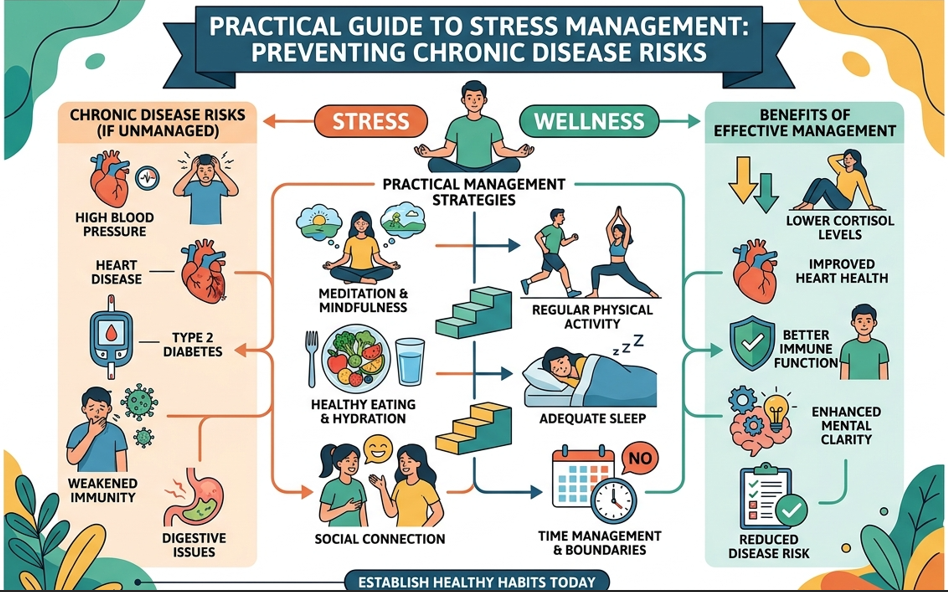
Chronic stress has become an inevitable part of modern life. While short-term stress can sharpen focus and boost performance, prolonged and unmanaged stress triggers a relentless cascade of stress hormones like cortisol and adrenaline. Over time, this chronic physiological arousal takes a severe toll on the body, elevating the risk of chronic conditions such as hypertension, cardiovascular disease, type 2 diabetes, and compromised immune function.
Fortunately, stress is manageable, and proactive lifestyle changes can significantly lower these health risks. Below is a practical guide to mastering stress and protecting your long-term health.
Understanding the Stress-Disease Connection
When you experience stress, your body activates the “fight-or-flight” response. While lifesaving in emergencies, a constant loop of stress keeps inflammation markers high and blood pressure elevated. Over years, this wear and tear (known as allostatic load) damages arterial walls, disrupts metabolic processes, and accelerates cellular aging.
Practical Strategies for Effective Stress Management
1.Identify and Map Your Stressors:Awareness is the foundation of change.
Keep a week-long stress journal. Note the time, situation, and physical reaction whenever you feel overwhelmed. Recognizing recurring triggers allows you to proactively avoid them or reframe your response.
2.Establish Boundary Rituals:Create clear separation between work and rest.
Set strict non-negotiable boundaries, especially with digital devices. Designate a specific evening cutoff time for work emails and news consumption to allow your nervous system to wind down.
3.Incorporate Somatic Regulation Techniques:Activate your parasympathetic nervous system.
Practice daily breathwork, such as box breathing (inhale for 4 seconds, hold for 4, exhale for 4, hold for 4) or 4-7-8 breathing. These techniques physically signal to your brain that you are safe, lowering heart rate and cortisol levels immediately.
4.Prioritize Restorative Sleep:Protect the 7 to 9-hour window.
Sleep deprivation amplifies emotional reactivity and spikes cortisol. Maintain a dark, cool sleeping environment and a consistent sleep-wake schedule to support hormonal balance and cellular repair.
5.Build Consistent Physical Movement:Burn off stress hormones naturally.
Exercise acts as a potent natural stress reliever by releasing endorphins and metabolizing excess adrenaline. Aim for at least 150 minutes of moderate aerobic activity or brisk walking per week.
